
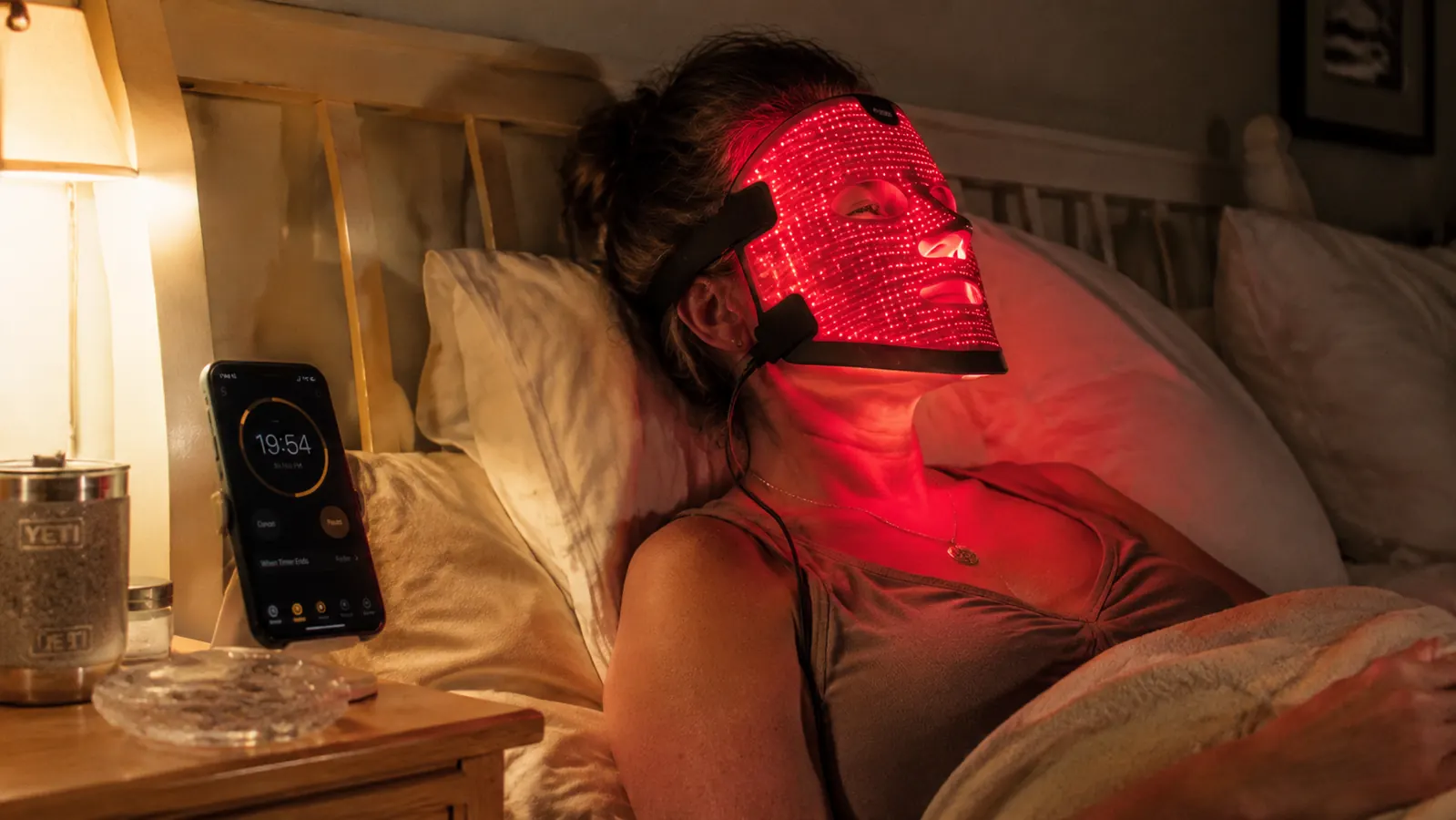
I bought the NVBOTY Red Light Therapy Mask on a Tuesday night after a dermatologist visit I'd been putting off for two years finally happened, and she told me the in-office LED sessions she offered would run me most of a car payment every month. I'm 47, I work dispatch for a regional trucking company, and I spend nine hours a day under fluorescent office lights that make every red patch on my cheeks look worse than it is. My skin has been rosacea-prone since my mid-30s, with a stubborn patch of texture across my forehead that no amount of moisturizer ever smoothed out. I ordered the mask that night, mostly out of spite for the dermatologist's price list.
It showed up three days later. I started wearing it on April 2nd, and as of this week I'm three full months in, somewhere north of 75 sessions logged. This is what actually happened, not the highlight reel version.
The Quick Verdict
Real, gradual improvement in redness and tone evenness with consistent nightly use, but it's a slow-build tool, not an overnight fix, and the fit takes some getting used to.
Amazon Check Today's Price →Skip the dermatologist's LED bill and try it at home first.
The NVBOTY mask runs the same red and near-infrared wavelengths clinics charge per session for, in a device you keep. Check today's price and current availability before you book another office visit.
Amazon Check Today's Price on Amazon →How I've Used It
My routine has stayed almost embarrassingly simple. Cleanse, pat dry, mask on, 12 minutes on the red and near-infrared combo mode, then whatever serum I was already using goes on after. I do it most nights around 9:30, after I've clocked off my last dispatch call and before I let myself scroll in bed. I skip maybe one or two nights a week, usually when I've fallen asleep on the couch before I meant to.
I didn't change anything else in my routine on purpose. Same cleanser, same moisturizer, same sunscreen most mornings, though I'll admit the windshield glare on long drives to and from the warehouse probably undoes some of that sunscreen effort anyway. I wanted to isolate what the mask itself was doing, not what a whole new regimen was doing, because that's the question I actually needed answered before I spent this kind of money on a single device.
The first two weeks felt like nothing. No dramatic before-and-after, no tingling miracle moment. Just me, sitting there for 12 minutes with a red glow on my face, wondering if I'd wasted money I could've put toward the dermatologist visit I'd skipped. That flat stretch is worth knowing about going in, because it's exactly where most people quit.
By week three I'd built a small dumb ritual around it, propping my phone against the bathroom mirror to watch an episode of something while the timer ran, which honestly did more for my odds of sticking with it than any promise of results. If you can't find a way to make the 12 minutes feel like downtime instead of a chore, that's the thing that'll get you before the mask's effectiveness ever does.
What's Actually Inside the NVBOTY Mask
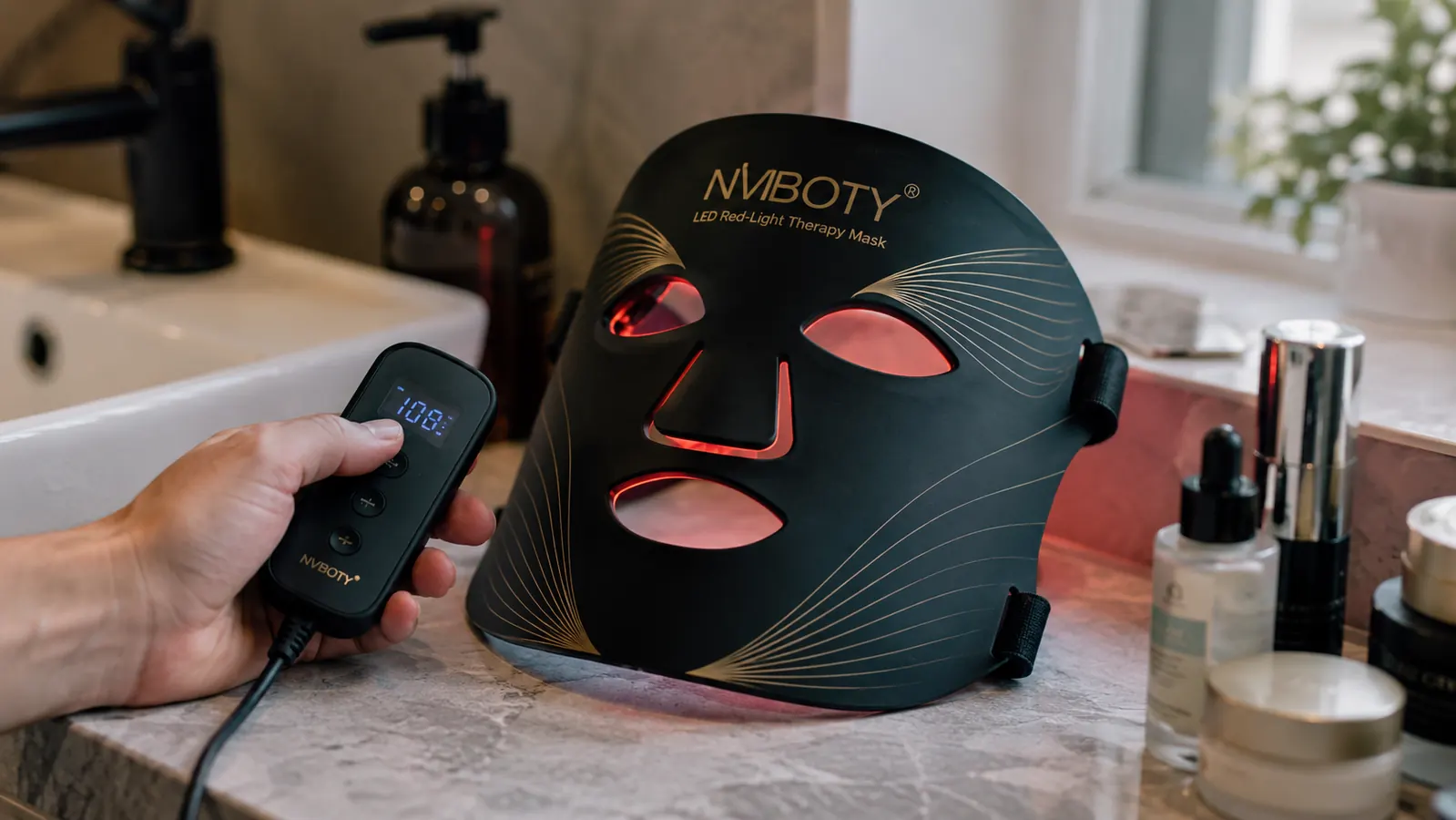
The mask runs four modes: red, blue, orange, and a combined red plus 850nm near-infrared setting, spread across 400 LEDs across the face shield. I used the red and near-infrared combo almost exclusively, since that's the pairing with the most research behind it for redness, tone, and collagen support. I tried the blue mode a handful of times during a small breakout in May and honestly can't say it did much either way in that short a window.
It runs off a 2000mAh rechargeable battery, which in practice means I charge it about once a week with nightly use, never mid-session. The remote is a small handheld unit with mode and timer buttons, and that's genuinely one of the better design choices here. You're not fumbling with a strap-mounted panel of buttons pressed against your face in the dark.
The fit is rigid plastic, not the soft silicone you see on some newer masks. It sits about half an inch off your skin rather than hugging it, which means you can layer a serum underneath without smearing it, but it also means the mask doesn't conform well if your face shape is on the narrower or wider end. Mine sat slightly loose around my jaw the first few weeks until I got used to positioning it.
There's a built-in timer that shuts the mask off automatically at 10 or 20 minute intervals depending on the setting, so it's not something you can accidentally leave running for an hour while you doze off. That safeguard mattered more to me than I expected going in, given how many nights I've genuinely nodded off mid-session on the couch waiting for the fan hum to lull me to sleep.
What Changed (and What Didn't) Over 3 Months
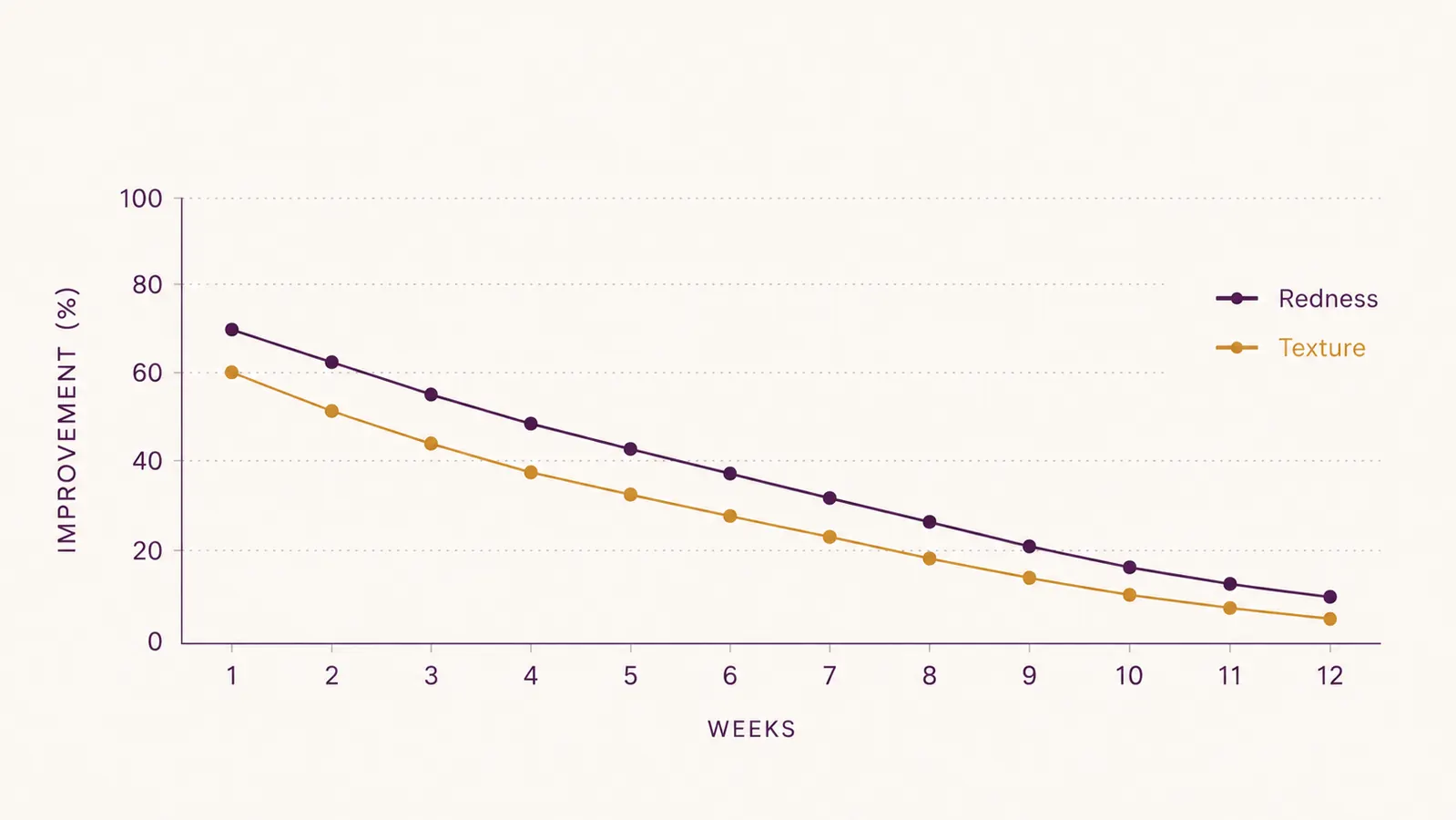
Around week four, the flush across my cheeks that used to show up by mid-afternoon started arriving later and fading faster. That's a subjective read, I know, but I started taking a phone photo every Sunday morning under the same bathroom light specifically so I wouldn't have to rely on memory, and looking back at weeks one through six, the difference is real, not wishful thinking.
By week eight, the textured patch on my forehead had smoothed out enough that foundation stopped catching on it. That was the change that mattered most to me personally, more than the redness even, because it was the thing I'd stopped noticing consciously and started just avoiding certain lighting to hide.
What didn't change: my pore size looks basically the same, and a small patch of hyperpigmentation near my hairline from an old sunburn is still there, maybe a shade lighter at most. This isn't a tool that erases discoloration on its own timeline. It's a tool that calms and evens tone gradually, and it does that job, but it's not doing everything.
Somewhere around week ten a coworker asked if I'd changed my skincare, unprompted, which was the first outside confirmation I'd gotten that this wasn't just me squinting at my own weekly photos looking for progress that wasn't there. That single comment probably did more to keep me consistent through the last stretch of the three months than any of my own tracking did.
The Real Tradeoffs Nobody Mentions
Twelve minutes doesn't sound like much until you're doing it every night for three months. It became a routine I had to protect, the same way I protect my sleep schedule around early dispatch shifts. If your nights are unpredictable, this is a harder habit to keep than the marketing photos suggest, and I'd guess that's the real reason so many masks like this end up in a drawer after a few weeks.
The mask also gets warm, not uncomfortably so, but noticeably by minute eight or nine, especially in the combo mode. If you run hot or deal with rosacea flares from heat specifically, that's worth testing on a lower setting first rather than jumping straight into a full 12-minute combo session on night one.
And it's not silent. There's a soft internal fan hum that I didn't expect from a face mask. It's not loud enough to bother a partner across the room, but it's there, and if you were picturing something you could wear while falling asleep, you'll want to set a timer instead, because I've woken up at 2 a.m. with it still on my nightstand, forgotten mid-charge, more than once.
One more thing worth flagging: the eye area is covered by the shield but the goggles inside are the basic kind, not the padded blackout style you see on some pricier masks. Light does leak in a bit at the edges if you shift position, which isn't a real problem, just something I noticed the first few nights and adjusted to quickly.
Other Options I Looked At First
Before landing on this mask, I seriously considered a standalone LED panel instead, the kind you prop on a stand and sit in front of hands-free. The appeal was obvious, no strap pressing on your face, no heat buildup right against your skin. But panels demand you sit still and face forward for the full session, and with my schedule, I knew I'd end up doing it half as often, which defeats the point of a cumulative therapy that depends on consistency more than intensity.
I also weighed just booking the occasional in-office LED session instead of buying anything. The math didn't work for me. A handful of sessions a year wasn't going to get me the consistent, near-nightly exposure that the research on red and near-infrared light actually points to for visible skin changes. A device I could use at home, on my own schedule, in my own kitchen after a long shift, was the only version of this that I was realistically going to stick with.
A friend on my dispatch team suggested a cheaper strap-style mask she'd seen advertised online, and I almost went that route to save some money. What talked me out of it was the lack of a proper near-infrared mode on most of the budget options I compared, since that's the wavelength that goes deeper than the surface and was the part I actually cared about for the texture on my forehead, not just the surface redness that's easier to market around.
What I Liked
- Noticeable redness and tone improvement by week 6-8 with consistent use
- Handheld remote is genuinely easier than face-mounted buttons
- Hands-free once it's on, so you can fold laundry or scroll during sessions
- Rechargeable battery lasts roughly a week of nightly 12-minute sessions
- Combo red and near-infrared mode covers the setting most people actually want
Where It Falls Short
- Rigid shell doesn't conform to every face shape, mine sat loose at the jaw at first
- Audible fan hum, not silent enough to fall asleep wearing
- Gets warm by minute eight or nine on the combo setting
- No real change on pore size or existing hyperpigmentation in 3 months
- First two to three weeks feel like nothing is happening
The flat, nothing-is-happening stretch in the first two weeks is exactly where most people quit, and it's exactly where you shouldn't.

Who This Is For
If you've got persistent redness, uneven tone, or textured patches that flare with stress, weather, or long hours under bad lighting, and you're willing to actually commit to 10 to 15 minutes a night for at least six weeks before judging results, this is worth the money. It's also a solid fit if you've priced out in-office LED sessions and want to know whether the underlying wavelengths do anything for your skin specifically before committing to a recurring appointment budget.
It's also worth it if you're the kind of person who needs a set routine to stay consistent with anything skincare related. Having a physical device with a timer and a charging cradle gave me a nightly cue that a bottle of serum sitting on the counter never did, and that structure ended up mattering as much as the light itself.
Who Should Skip It
If you're looking for something that fixes deep hyperpigmentation, acne scarring, or pore size, this isn't going to get you there on its own, and you'll be disappointed. Same if you can't realistically carve out a consistent nightly window, since inconsistent use is where most of the disappointment I've read about online seems to come from. And if you run warm easily or your rosacea flares specifically with heat, test cautiously on the lower modes before committing to the full combo session every night.
If you travel constantly and can't keep a consistent charging and evening routine, or you're expecting results inside the first two weeks, hold off. This rewards the person who can treat it like flossing, not the person looking for a one-time fix before an event next weekend. Give it the full six to eight weeks before deciding either way, because that's roughly where my own results actually started to show.
Three months of consistent nights got my skin here. Yours starts whenever you're ready.
If your skin does better with calm, cumulative treatment instead of harsh actives, this is the low-effort nightly habit worth trying before you book another expensive office visit. Check today's price on Amazon.
Amazon Check Today's Price on Amazon →