
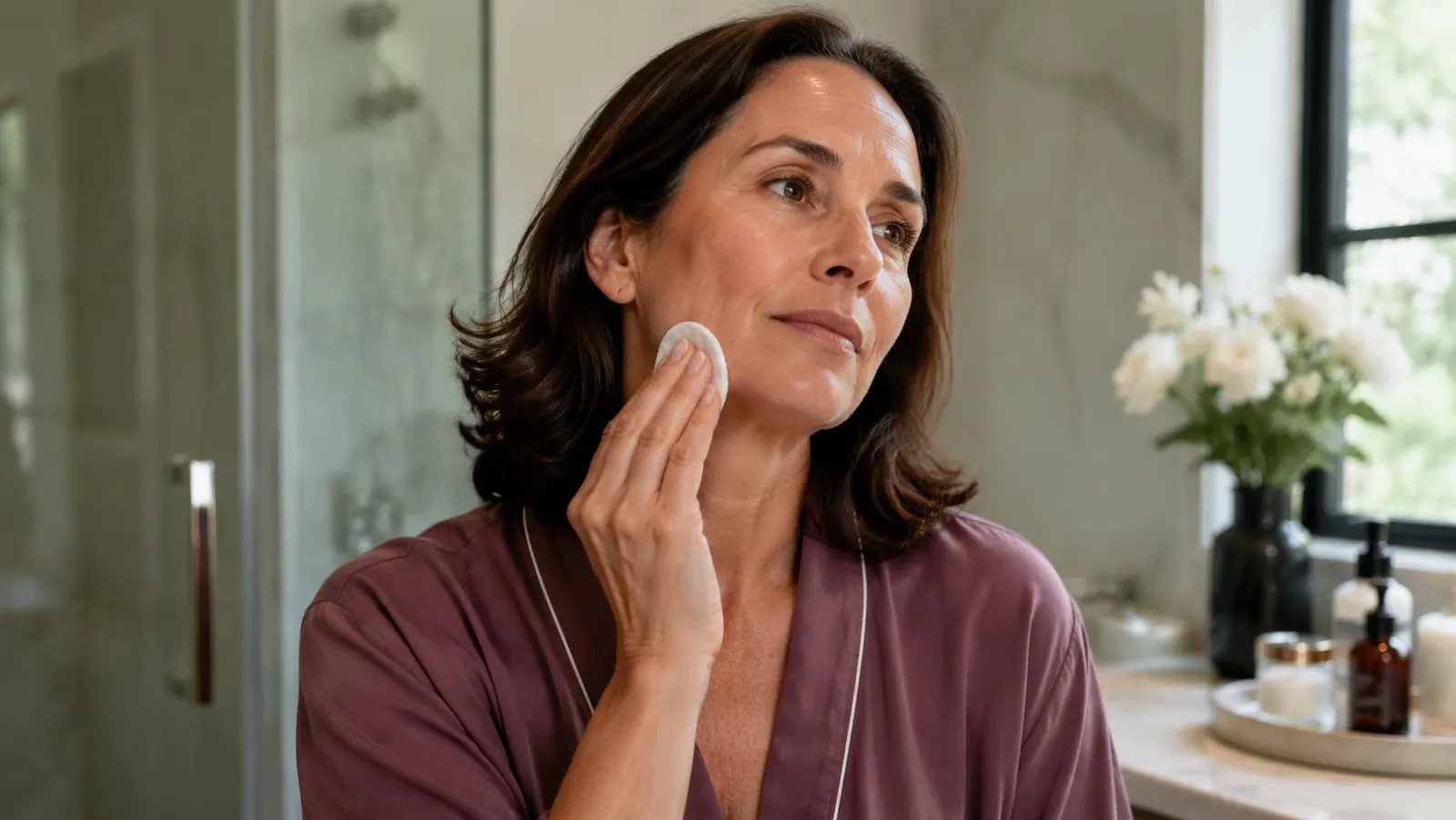
I drive a delivery route for a regional mattress company, five ten-hour days a week, recycled cab air blowing across my face for most of each shift, sun coming straight through the windshield on the afternoon leg home. By the time I clock out, my skin looks tired in a very specific way: dull under normal light, a little rough when I run a finger along my jaw, and a scatter of small bumps on my chin that never quite turn into real breakouts, they just sit there for weeks. I switched cleansers three separate times over about a year and nothing moved the needle. What actually changed things was a jar of pre-soaked toner pads I almost didn't buy because the label looked aggressive on paper, 20% glycolic acid paired with 2% salicylic acid. Eight weeks of swiping one across my face most nights, and I finally understand why my coworker Priya, who has spent more on skincare than I have on my truck's tires, kept telling me to just try the MAREE pads already.
This isn't a sponsored post dressed up as a review. I bought my own jar, used it the way most people actually use a product, inconsistently some weeks, religiously others, and I'm going to walk through exactly what changed on my skin, what stayed the same, and the four-day stretch where I nearly put the jar back in the cabinet for good.
The Quick Verdict
A genuinely effective at-home exfoliant for dull, congested, uneven skin, but the strength is real, the purge is real, and daily sunscreen stops being optional the moment you open the jar.
Amazon Check Today's Price →Dull, bumpy skin that won't budge no matter what you cleanse with?
MAREE's pads pair a real 20% glycolic acid dose with 2% salicylic acid in a swipe-and-go pad, no extra tools, no water needed. Check today's price and see why it's the step most people are missing.
Amazon Check Today's Price on Amazon →How I've Used It
I did not start nightly. I'd read enough warnings about 20% glycolic acid to know better, so I started at three nights a week for the first two weeks, always after cleansing, always before anything else. One pad, folded in half, swiped from the center of my face outward, then left to dry down instead of rinsed off. That last part surprised me. I'd assumed a pad this strong needed to come off, but MAREE's directions are clear that it's meant to sit and work like a leave-on toner.
By week three I moved to five nights a week, and by week five I was doing it nearly every night, skipping only when I'd fallen asleep in my work clothes before I made it to the bathroom mirror, which happens more than I'd like to admit on this schedule. I never layered it under a retinoid or another exfoliating acid on the same night. That felt like an obvious way to turn a manageable tingle into an actual problem, so I kept the rest of my routine boring on purpose: a gentle cleanser, the pad, a plain moisturizer, and sunscreen every single morning without exception.
The first few nights stung a little, not painfully, more like a warm prickling that faded inside a minute. I want to be upfront about that because a lot of reviews gloss right past it. If you've never used an acid this strong before, that sensation is normal, but it's also exactly why I didn't start nightly on day one, and why I'd tell anyone else not to either.
What's Actually in the Jar
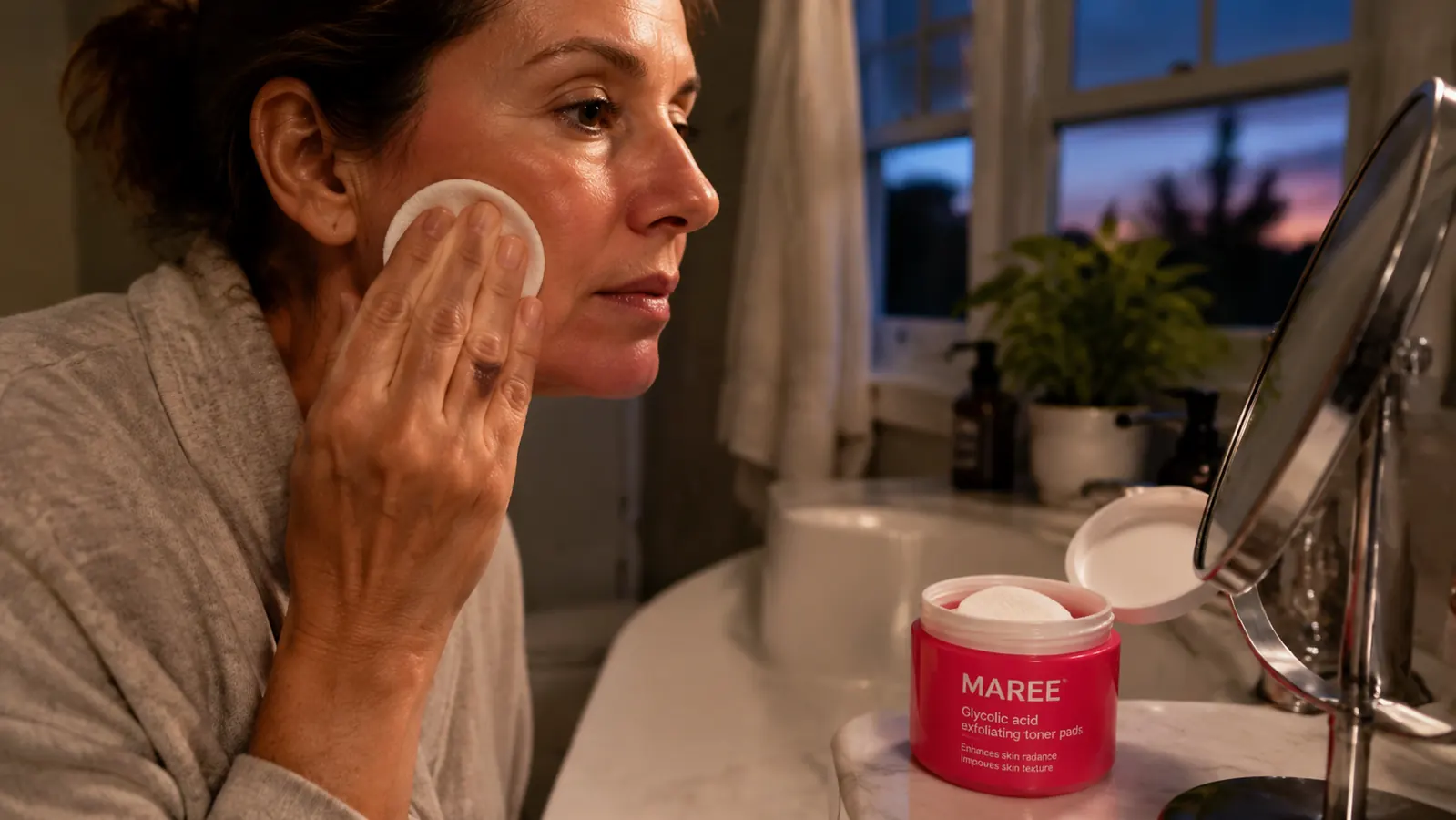
The headline ingredient is glycolic acid at 20%, an alpha hydroxy acid derived from sugar cane that works on the surface of the skin, loosening the bonds holding dead cells together so they shed faster and more evenly instead of building up into the dull, rough layer I'd been dealing with. Paired with it is 2% salicylic acid, a beta hydroxy acid that's oil-soluble, meaning it can actually get down into a clogged pore rather than just sitting on top of it. That combination is the reason this jar does two different jobs at once: smoothing the surface and quieting the small chin bumps that a straight glycolic product wouldn't necessarily touch.
The pads themselves are pre-soaked, textured on one side, and come packed fifty to a jar, which at three to five nights a week lasted me well past the eight-week mark I'm reviewing here. No extra water, no cotton rounds, no measuring anything out. For someone whose schedule doesn't always allow for a ten-step routine, that simplicity is a real part of why I stuck with it when I'd abandoned more complicated exfoliating routines before.
What I appreciated most on paper is that 20% is a meaningful, salon-adjacent strength rather than the watered-down 5% to 7% you find in a lot of drugstore pads that never seemed to do much for me over months of use. That strength is also exactly why this isn't a product to treat casually, and why the ramp-up schedule I used matters more than it might for a gentler exfoliant.
Eight Weeks, Broken Down
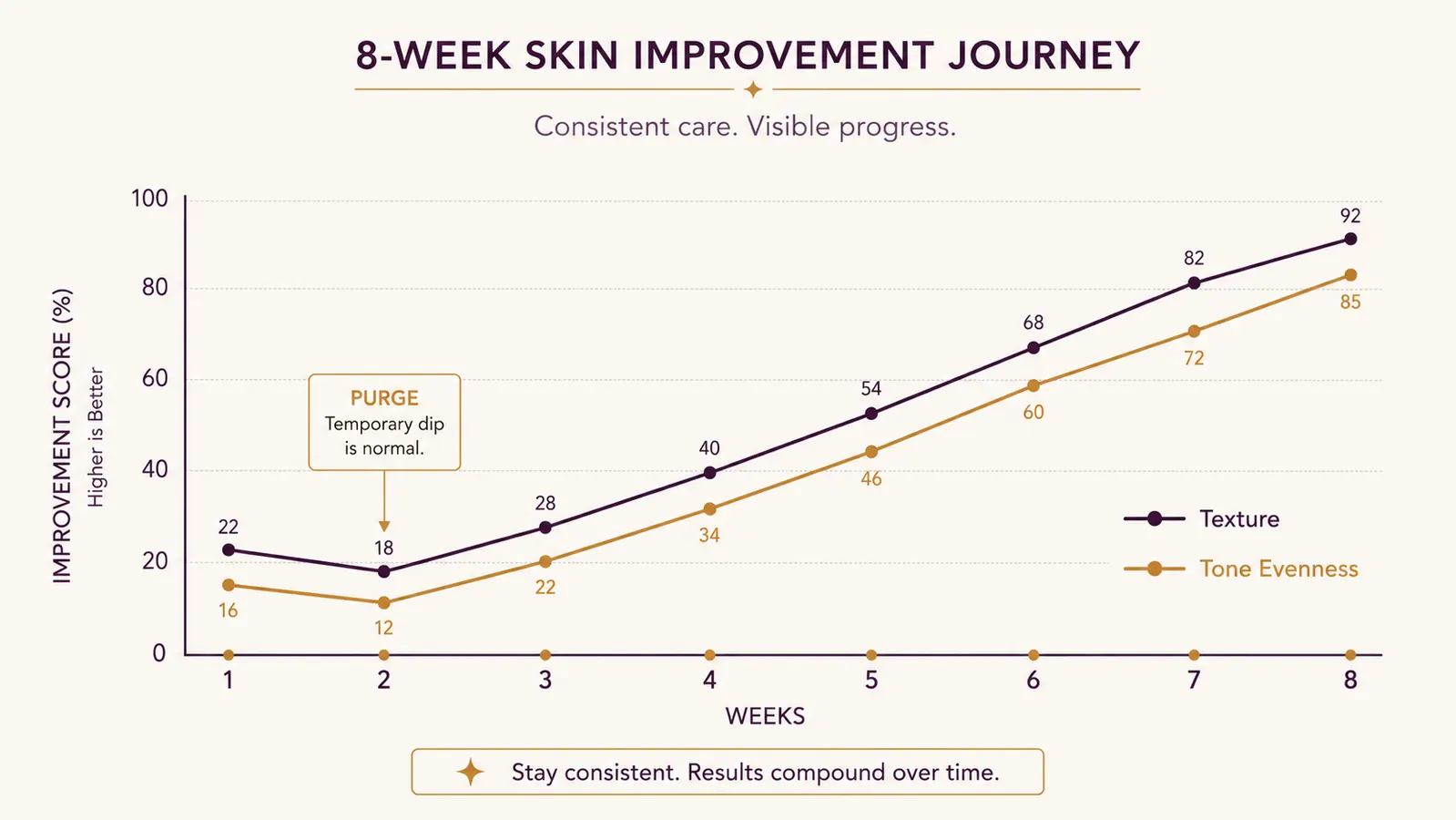
Weeks one and two were mild tingling and not much else visually, aside from one thing I wasn't expecting: a small purge along my chin and jawline around day ten, three whiteheads that hadn't been there before, plus a bit of extra flaking on my cheeks. I've been through enough skincare changes to recognize a purge versus a bad reaction, mine calmed within about four days, but it's the stretch that would talk a lot of people out of continuing, and I get why.
By weeks three and four, the purge had fully settled and the texture change started showing up. Foundation stopped catching on my jaw the way it used to, and running a finger along my cheek in the evening felt noticeably smoother than it had at the start. My pores looked a little less congested under bathroom lighting, though I want to be honest that this is the kind of change you notice more in touch than in a photo.
Weeks five and six were where tone started catching up to texture. A patch of post-acne marking along my jaw that I'd had for close to a year looked visibly lighter, not gone, but softer at the edges in a way sunscreen and patience alone hadn't managed for me. I started taking a phone photo every Sunday morning under the same bathroom light specifically so I wasn't relying on memory, and comparing week one to week six side by side is what actually convinced me this wasn't wishful thinking.
By weeks seven and eight, nightly use felt normal instead of like a chore, and the overall look was what I'd describe as a genuine glow rather than just less dullness. Priya noticed unprompted at work, which was the outside confirmation I hadn't gotten from my own weekly photos, and it's honestly what kept me consistent through the last two weeks of the review window.
The Tingle, the Purge, and the Trade-offs
The tingling sensation is not a myth cooked up by cautious reviewers. It's real, it's noticeable, and if you have reactive or thin skin, I'd patch test on your inner forearm before your face and start at once or twice a week rather than jumping straight to nightly. I didn't, and the first week taught me why the instructions suggest easing in.
The bigger trade-off, especially given my job, is sun sensitivity. Glycolic acid at this strength thins the outermost layer of skin as it works, which means sun damage happens faster and shows up more easily if you're not diligent. With sun hitting me through a windshield most afternoons, daily sunscreen stopped being a nice-to-have the moment I opened this jar. I reapplied at every stop where I could, and I still noticed I was more prone to a quick flush on my drive home than I used to be.
I also wouldn't stack this with a retinoid or another acid on the same night, and I'd steer clear entirely if you're dealing with active rosacea, eczema, or skin that's currently compromised from anything else. This is a strong active ingredient wearing a gentle, convenient-looking pad, and treating it with the same casualness as a basic toner is how people end up with irritation they blame on the wrong culprit.
What I Tried Before This
Before MAREE, I went through two different drugstore glycolic pad options, both somewhere around 5% to 7% strength, for roughly two months each. Neither one did anything I could point to with confidence. My skin felt fine using them, but fine was also exactly how it felt before I started, which told me the strength simply wasn't enough to move a texture and tone issue that had been building for years.
I also seriously considered booking an in-office chemical peel instead of buying anything at home. The appeal was obvious, a controlled, professional-strength treatment done in a single visit instead of managing it myself every night. What talked me out of it was scheduling. Between my route and my days off not lining up with a dermatologist's office hours, I knew I'd end up going once, maybe twice, rather than getting the kind of consistent, repeated exfoliation that actually produces lasting texture change.
What settled it for me was the combination in this specific jar: a strength close to what you'd get in office, paired with salicylic acid for the pore side of the problem, delivered as a pad I could keep in my bathroom and use on my own unpredictable schedule. That last part mattered more than any ingredient list, because a great product I use twice a month does less for my skin than a good one I actually reach for.
What I Liked
- Visible texture smoothing by week three to four with consistent use
- Real 20% glycolic acid strength, closer to salon-level than most pad products
- 2% salicylic acid handles the clogged-pore side that straight AHA pads miss
- Pre-soaked, no water or extra tools needed, easy to fit into an unpredictable schedule
- Noticeable tone evening on old post-acne marking by week six
Where It Falls Short
- Real purge period around days ten to fourteen that can look like a bad reaction
- Tingling on application, not ideal for reactive, rosacea-prone, or thin skin
- Meaningfully increases sun sensitivity, daily sunscreen is non-negotiable
- Should not be layered with retinoids or other acids on the same night
- Scent and sensation lean clinical, not a spa-like experience
The purge scared me for about four days. I almost put the jar back in the cabinet for good. I'm glad I didn't.
Who This Is For
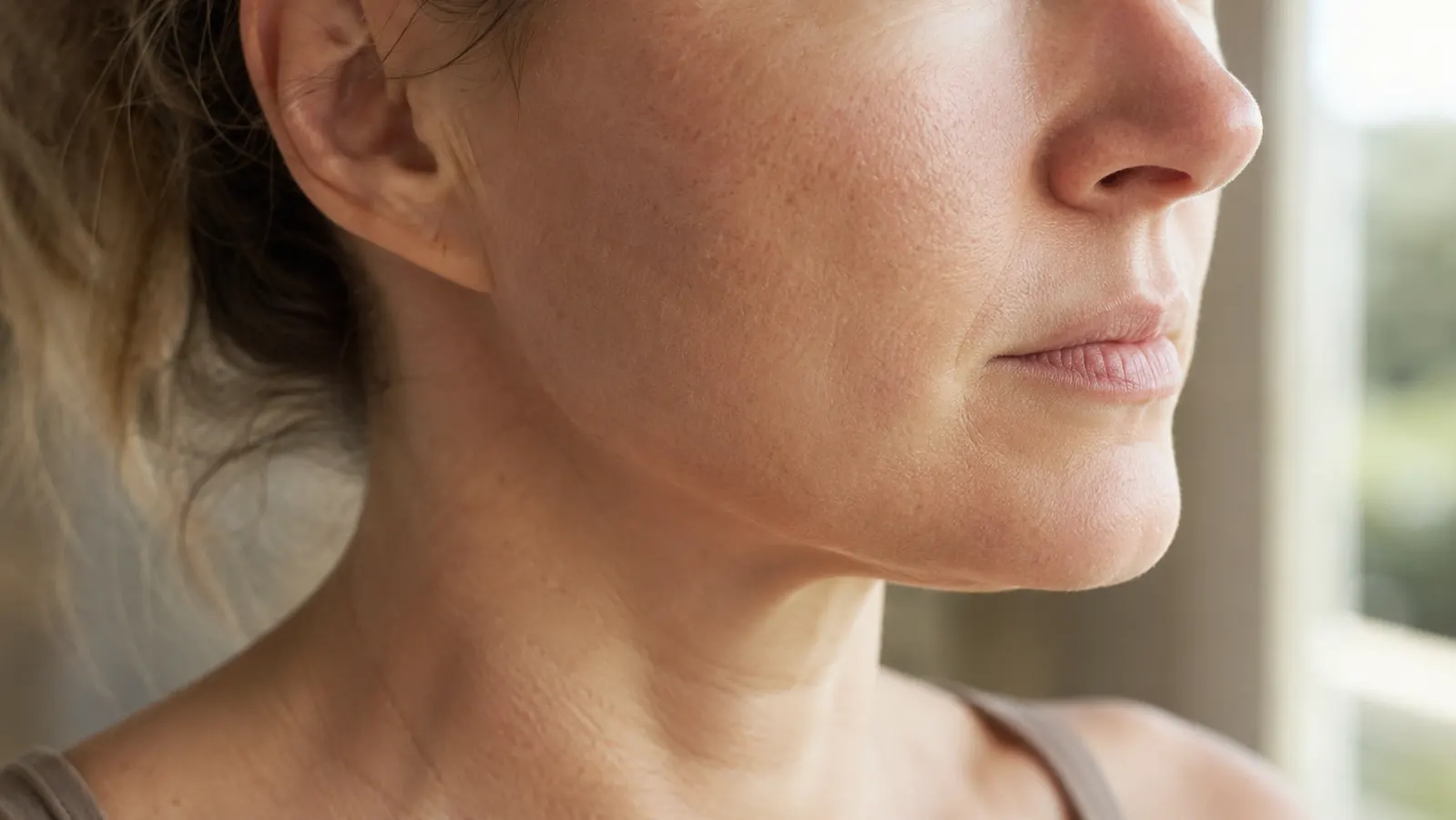
If you've got dull, rough texture, closed comedones that never fully surface, or lingering tone unevenness from old acne marks, and you're willing to ramp up slowly and commit to sunscreen every single day without exception, this earns its spot in the routine. It's also a strong fit if you've tried weaker glycolic products for months with nothing to show for it, because the strength here is the actual difference maker, not a marketing detail.
It's especially worth it if your schedule doesn't allow for a complicated multi-step routine most nights. The pad format removed the last excuse I had for skipping exfoliation, and that consistency ended up mattering as much as the ingredient list itself.
Who Should Skip It
If you have active rosacea, eczema, or skin that's currently irritated or compromised from another product, this isn't the place to start. The same goes if you're pregnant or nursing, since I'd talk to a doctor before adding a salicylic acid product regardless of what the label says. And if you know you won't wear sunscreen consistently, the sun sensitivity trade-off alone should be a dealbreaker for you.
Skip it too if you're expecting overnight results before a deadline. This is a build-over-weeks product, not a same-week fix, and the purge window in the first two weeks will read as a step backward before it becomes a step forward. Give it the full six to eight weeks before deciding either way, because that's roughly where my own results actually became undeniable.
Eight weeks of nightly swipes got my skin here. Yours starts with one jar.
If your skin has been stuck at dull and bumpy no matter what you cleanse with, a real-strength glycolic and salicylic pad might be the missing step, not another serum. Check today's price on Amazon.
Amazon Check Today's Price on Amazon →