
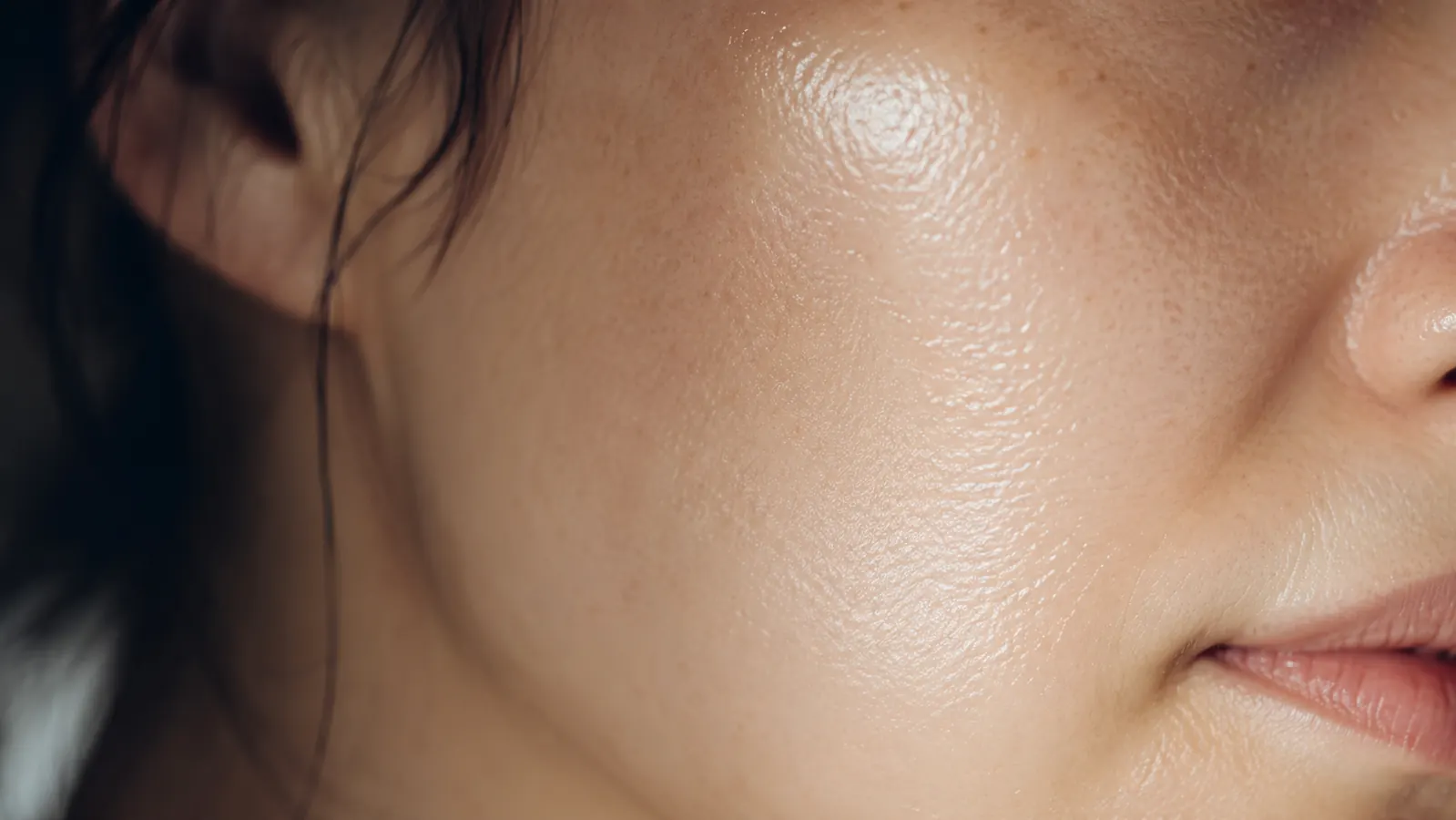
Getting glass skin with snail mucin comes down to two things most guides skip past: applying the essence in thin, patted layers instead of one thick pump, and sealing that hydration in before it has a chance to evaporate off your face. I install and service HVAC units for a living, which means I spend half my week climbing in and out of a work truck, sun baking through the windshield on the drive between job sites, dry attic air and insulation dust working against my skin the other half. Glass skin, the poreless, light-catching glow that looks almost wet under good lighting, seemed like something that only happened to people who weren't breathing fiberglass particles for a living. I was wrong about that, but only after I stopped treating a snail mucin essence like a regular moisturizer and started treating it like the layering step it actually is.
I built this routine around COSRX Snail Mucin 96% Repairing Serum after a coworker's wife, who's into Korean skincare, told me flat out that glass skin isn't a product, it's a technique, and most people who buy the right bottle still never get there because they apply it wrong. She was right. The bottle sat in my bathroom for two weeks doing basically nothing before I changed how I was using it. What follows is the exact order, technique, and timeline that took my skin from flat and dust-dry to something that actually reflects light the way glass skin is supposed to.
Glass skin starts with a formula concentrated enough to layer
This whole routine is built around COSRX Snail Mucin 96% Repairing Serum, a 96% concentration of snail secretion filtrate in a thin, fast-absorbing essence. That high concentration is exactly what makes it possible to apply in multiple thin layers without ending up greasy or pilled.
Amazon Check Today's Price on Amazon →Here's the order I'll walk through: prepping skin so the essence actually has something to absorb into, the patting technique that separates glass skin from a regular skincare routine, the sealing step that keeps the glow from disappearing by noon, the morning protection step that's non-negotiable if you want the effect to last, and how to track progress honestly instead of guessing whether it's working.
Step 1: Start with a clean, damp canvas
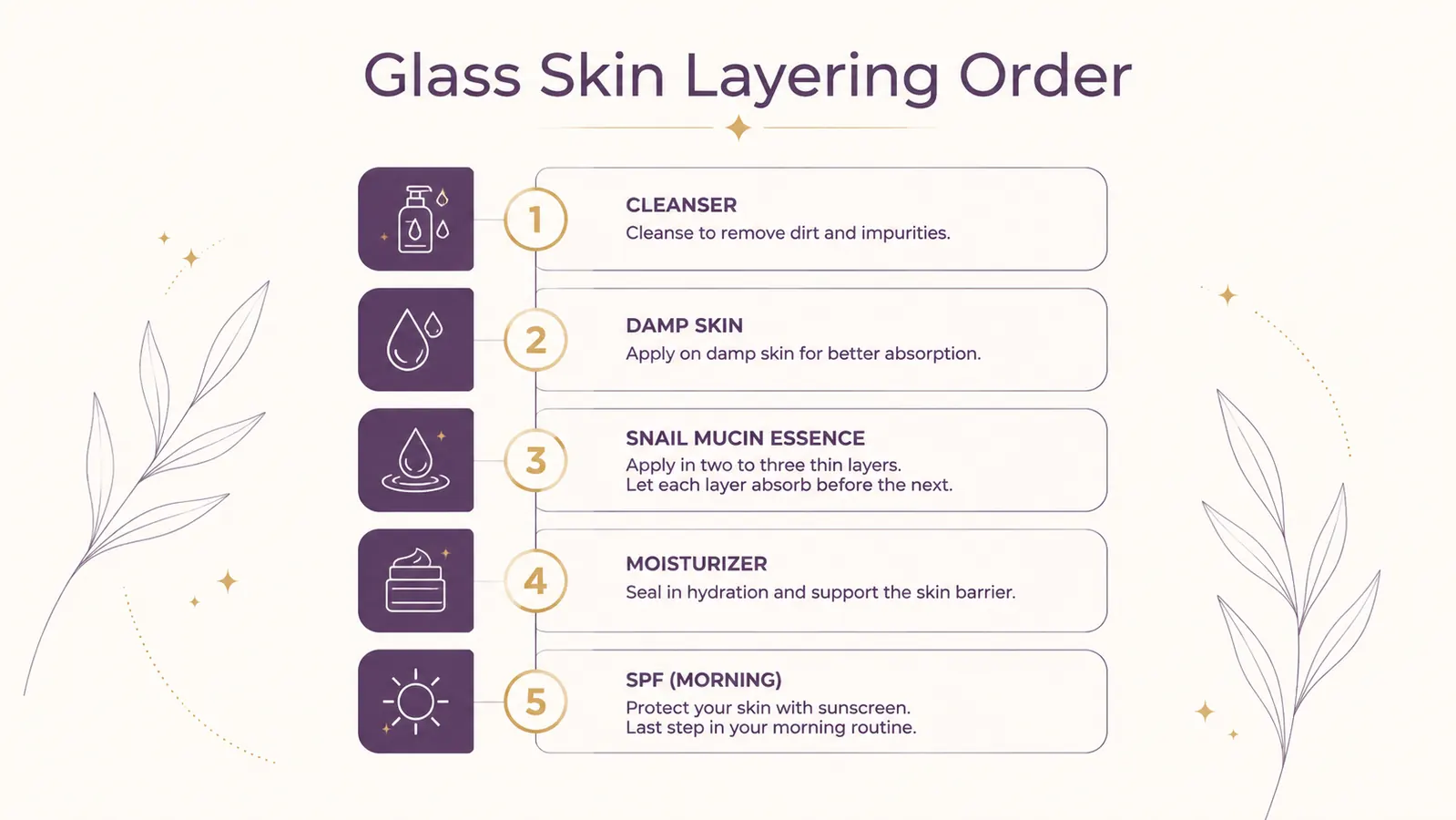
Glass skin depends on humectants pulling water into the skin, and humectants work far better on damp skin than on skin that's completely dried out. I wash with a gentle, non-stripping cleanser, morning and night, and I stopped patting my face bone dry afterward. Instead I leave it slightly damp, just enough that it still feels cool to the touch, and apply the essence within about sixty seconds of stepping away from the sink. That window matters more than almost anything else in this routine. Wait too long and your skin's surface dries back out, which means the essence has to work harder to rehydrate it before it can even start layering.
If you wear sunscreen or makeup during the day, get all of it off first with a proper cleanse before you start the evening routine. Dust, sweat, and leftover SPF sitting on your skin block the essence from actually reaching it, which was a bigger issue for me than I expected once I started climbing through attics and crawlspaces on hot afternoons. A washcloth with warm water on my second pass, after the cleanser, made a visible difference in how the essence sat on my skin afterward.
One thing I'd tell anyone starting from dry, flaky, or actively irritated skin: hold off on the full glass-skin layering routine below until the flaking calms down. A damp-skin humectant works best on a barrier that's intact enough to hold water once it's pulled in. If your skin is cracked or raw anywhere, a plain, fragrance-free moisturizer for a week comes first.
Step 2: Layer the essence in thin coats, not one thick pump
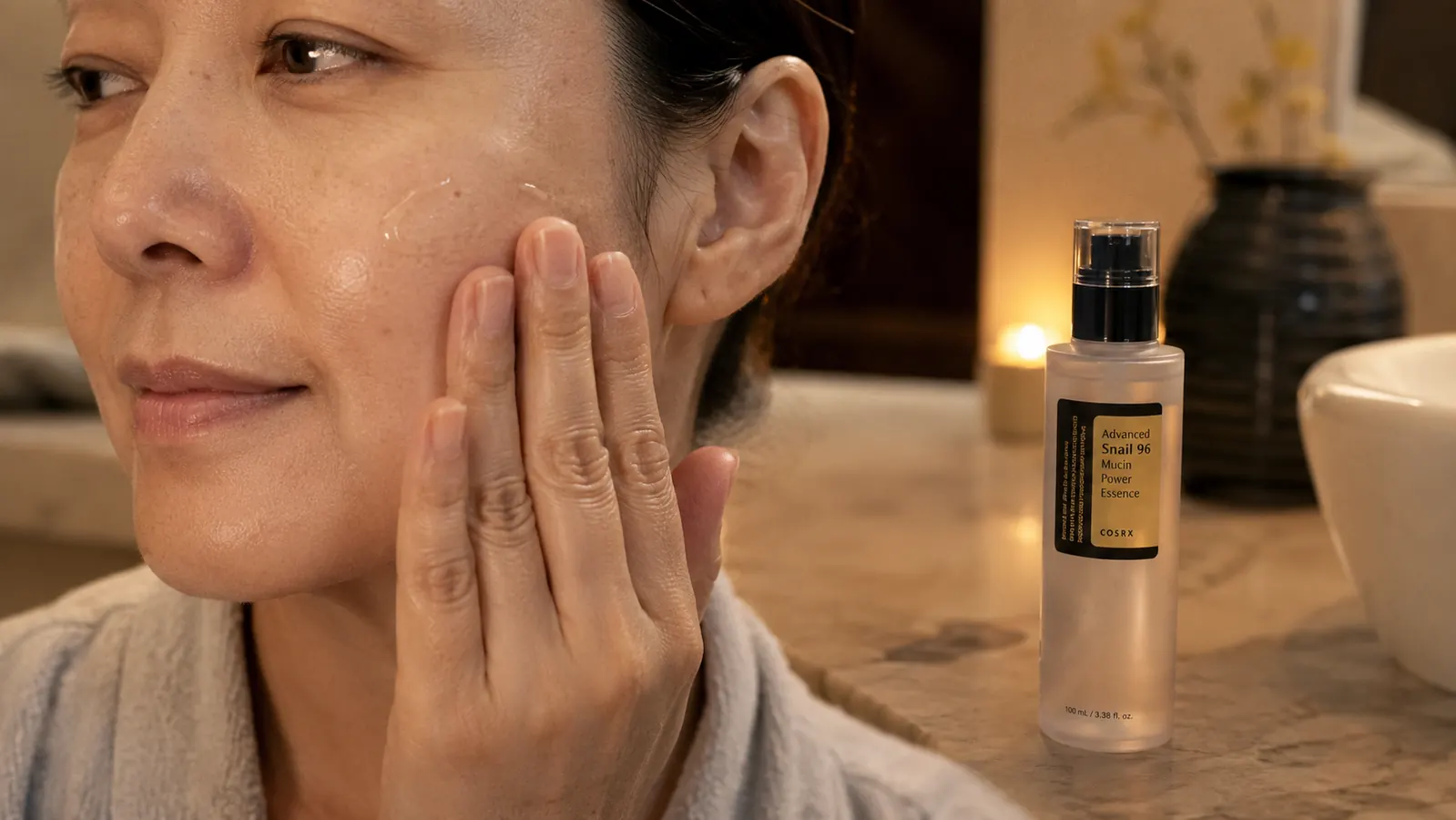
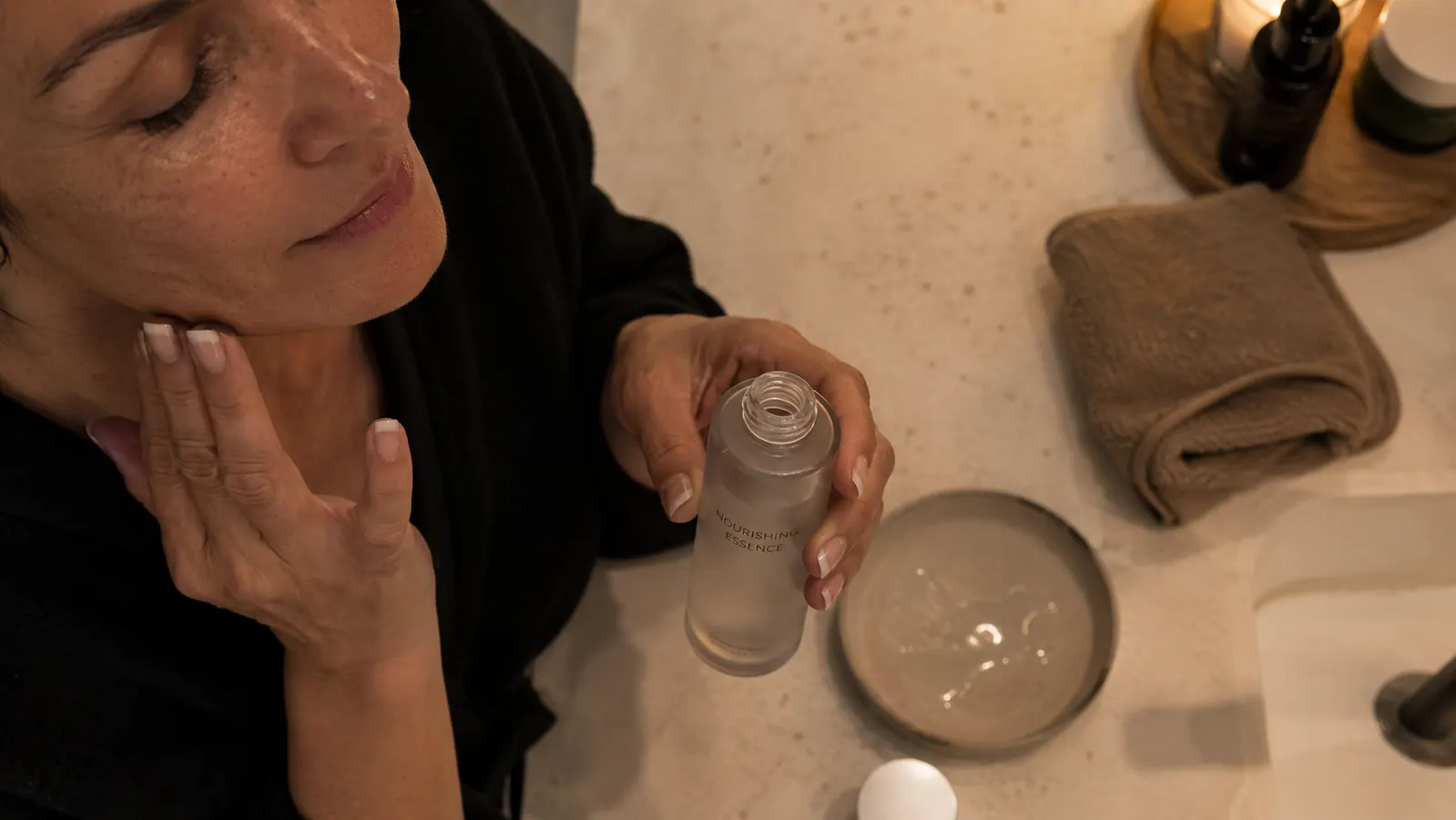
This is the actual glass-skin technique, and it's the step that took my results from nothing to noticeable. Instead of applying one thick layer of essence and moving on, I use two to three thin layers, each one pressed into damp skin with flat fingertips rather than rubbed in with a swiping motion. One small amount at a time, patted gently across the forehead, cheeks, chin, and jaw, waiting about twenty to thirty seconds between layers for the first one to settle before adding the next.
The patting motion matters more than people expect. Rubbing or dragging the essence across your face can pull at skin that's still adjusting and doesn't help it absorb any faster. Pressing with flat fingers, almost like you're stamping the product in rather than spreading it, is what actually builds that layered, cushioned look glass skin is known for. I felt a little ridiculous doing this in a gas station bathroom mirror the first few times, but the difference in how my skin held moisture through a full shift was real within the first two weeks.
Because COSRX's essence is thin and fast-absorbing, three light layers still sink in within a couple of minutes total, nowhere near the fifteen or twenty minutes a thick occlusive cream needs to fully settle. That's the whole reason multi-layering with this specific formula works without leaving skin feeling coated. A heavier cream layered three times would just sit on top and pill. A thin essence layered three times builds hydration the way glass skin actually needs.
Step 3: Seal it in before it has a chance to evaporate
Humectants pull water toward the skin, but without something on top to hold that water in place, a lot of it just evaporates back out within an hour, especially in dry air, which describes both my truck cab and most attics I work in. After the last layer of essence has settled, I follow with a basic, fragrance-free moisturizer, applied while my skin still has a little tackiness left from the essence. That tackiness is a good sign, it means there's still product actively absorbing, not a sign to wipe anything off before moving on.
This sealing step is where most people's glass-skin attempts quietly fail. They nail the essence layering, skip a real moisturizer on top, and wonder why the glow is gone by early afternoon. A moisturizer doesn't need to be heavy or expensive to do this job, it just needs to sit on top and slow down how fast that hydration leaves. I use a plain, unscented one, nothing with added actives, since I don't want anything competing with what the essence just did.
If your skin runs oily or you live somewhere humid, a thinner gel moisturizer does the same sealing job without feeling heavy. If your skin runs dry, especially if you're dealing with dust, wind, or dry heat like I am most days, a slightly richer cream is worth it. Either way, skipping the sealing step entirely is the single most common reason a good essence doesn't translate into visible glass skin.
Step 4: Protect the glow every morning with SPF
Glass skin depends on an intact, well-hydrated surface reflecting light evenly, and sun damage does the opposite of that. It roughens texture, uneven-tones the skin, and undoes a lot of the smoothness you just spent the night building. For someone getting real sun through a windshield most days, this step isn't optional the way it might feel for someone who's indoors all day. I keep sunscreen in the truck now and apply it as the very last step every single morning, after moisturizer, before I ever start the drive to my first job.
This matters even more once your snail mucin routine is actually working, because smoother, better-hydrated skin shows sun damage faster and more visibly than rough, dull skin does. It's a strange trade-off nobody warns you about. Skip sunscreen after weeks of building up that glow and you can undo more progress in a single long, unprotected drive than a week of consistent layering built up. I reapply if I'm out of the truck and in direct sun for more than an hour, which happens more often than I'd like on rooftop unit installs.
Windshield glass blocks some UV but lets a meaningful amount of UVA through, the wavelength most responsible for the slow, uneven dullness that shows up on the sun-facing side of a driver's face over time. A sunscreen applied every morning is the difference between glass skin holding up over months and the whole effort quietly reversing itself one sunny drive at a time.
Step 5: Give it six weeks and track with honest photos
Glass skin doesn't show up overnight, and day-to-day changes are close to invisible even when real progress is happening underneath. I started taking a photo in the same spot, same bathroom light, once a week, always before I'd put anything on my face. Looking at week one next to week three is what convinced me something was actually different, because in the moment it never felt like enough to notice on its own.
By around week two, my skin held moisture noticeably better through a full shift, less of that tight, flaky pull by the time I got home. By week four, the texture had smoothed out enough that light caught my cheeks differently under the bathroom mirror, less matte and flat, more of that light-reflecting look glass skin is named for. Week six is when a guy I work with, not someone who comments on anything skin related, asked if I'd started using a different soap. That kind of unprompted comment from someone who has no idea what glass skin even is told me more than my own weekly photos did.
Watch for signs you're overdoing the layering rather than not doing enough of it, any tightness that shows up instead of easing, small bumps along the jaw, or a greasy film that doesn't settle after ten minutes. If that happens, drop back to a single layer of essence for a week before building back up to two or three. Most people who give up on this technique early actually just piled on too many layers too fast without giving their skin a chance to adjust to the routine first.
What Else Helps
The layering technique does most of the work, but a few habits outside the routine made the results hold up better for me. A small humidifier running overnight made a real difference on the driest weeks, especially once the heat kicks on and indoor air dries out along with everything else. I also stopped taking long, hot showers right before bed, since hot water strips the same surface hydration the essence is trying to build back up, and I do a quick lukewarm rinse instead when I can help it.
Consistency beat complexity every time I tested it against myself. The nights I added extra products on top of the essence and moisturizer, hoping to speed things up, were the nights my skin looked worse the next morning, not better. The plain routine, cleanser, damp-skin layering, moisturizer, and SPF in the morning, is what actually built the glow, and every time I complicated it, I set myself back instead of moving faster.
Sleep mattered more than I expected too. On the stretches where I was running on five or six hours because of an early call-out, my skin looked duller and less bouncy no matter how carefully I'd layered the night before. None of that replaces the routine itself, it just decides how much of the routine's work actually shows up the next day.
The essence didn't change until I changed how I applied it. Thin layers, patted in, sealed before they could evaporate, that's the whole difference between a bottle that sits there and skin that actually looks like glass.
The technique is free. The glow starts with one bottle applied the right way.
Three thin, patted layers of COSRX Snail Mucin 96% Repairing Serum, sealed with a basic moisturizer and protected the next morning, is the whole routine. No twelve-step lineup required.
Amazon Check Today's Price on Amazon →